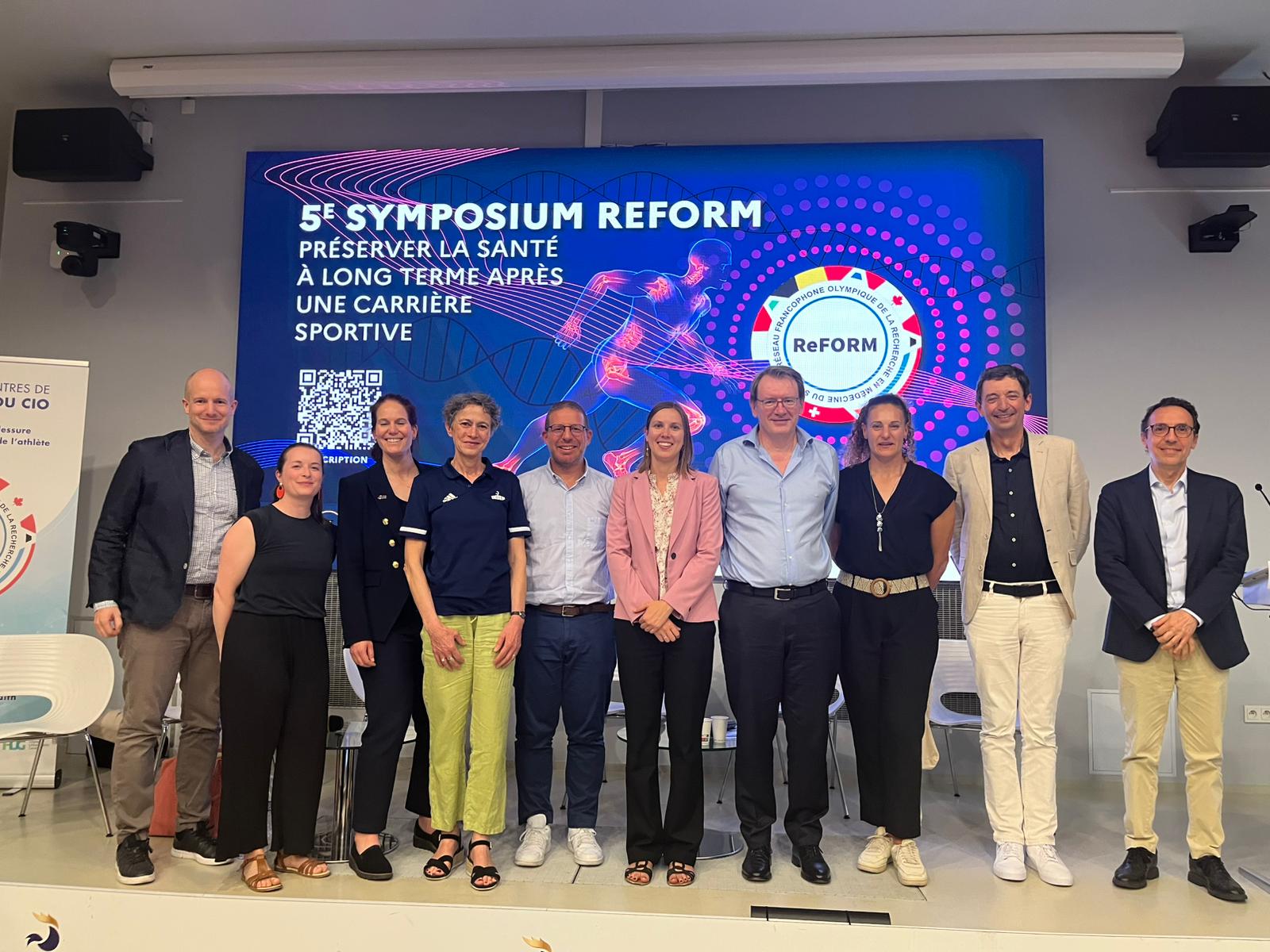
5th ReFORM Symposium on Injury Prevention in Sport
January 25, 2026Career… and After ? The Long-Term Consequences of Sports Participation
The 5th ReFORM Network Symposium focused on a central yet still underexplored issue in sports medicine: life after an elite athletic career.
Through a full day structured around four scientific sessions and a final roundtable discussion with athletes, the symposium addressed the physical, neurological, psychological, and social consequences of intensive sports participation, highlighting key issues related to injuries, concussions, mental health, chronic pain, self-medication, and career transition.
Scientific highlights
Long-term consequences of traumatic injuries
The presentations showed that injuries sustained during an athletic career leave lasting sequelae, varying across disciplines (soccer, judo, cycling, handball, dance), with a high prevalence of chronic pain, early-onset osteoarthritis, and functional limitations among former athletes. A strong message emerged: injury prevention must take long-term consequences into account, not only return-to-play.
Long-term impact of concussions
The speakers highlighted persistent neurocognitive impairments following repeated concussions, as well as the potential—still under validation—of neurotechnologies for long-term monitoring. The need for multidisciplinary care pathways was strongly emphasized.
Mental health, pain, and post-career transition
This session underscored that the end of an athletic career represents a major period of vulnerability, characterized by increased risks of anxiety and depressive disorders, loss of identity, and chronic pain. Speakers advocated for integrated support systems combining mental health care, education, dual-career pathways, and structured support for career transition.
Self-medication and high-risk practices
Discussions revealed how common self-medication is among athletes, both during and after their careers, often normalized within high-performance environments. The associated physical and psychological risks, as well as the need for structured post-career follow-up programs, were clearly identified.

Roundtable – Giving Athletes a Voice
The day concluded with a roundtable discussion featuring elite athletes, highlighting:
-
the importance of listening to one’s own body,
-
the need for a cultural shift in how injury prevention is approached,
-
and the importance of a well-prepared, holistic, and human-centered career transition.
Key message
The 5th ReFORM Symposium emphasized that prevention does not end with the conclusion of an athletic career. Protecting athletes’ health requires a long-term perspective, integrating prevention, medical care, psychological support, and preparation for life after sport.